
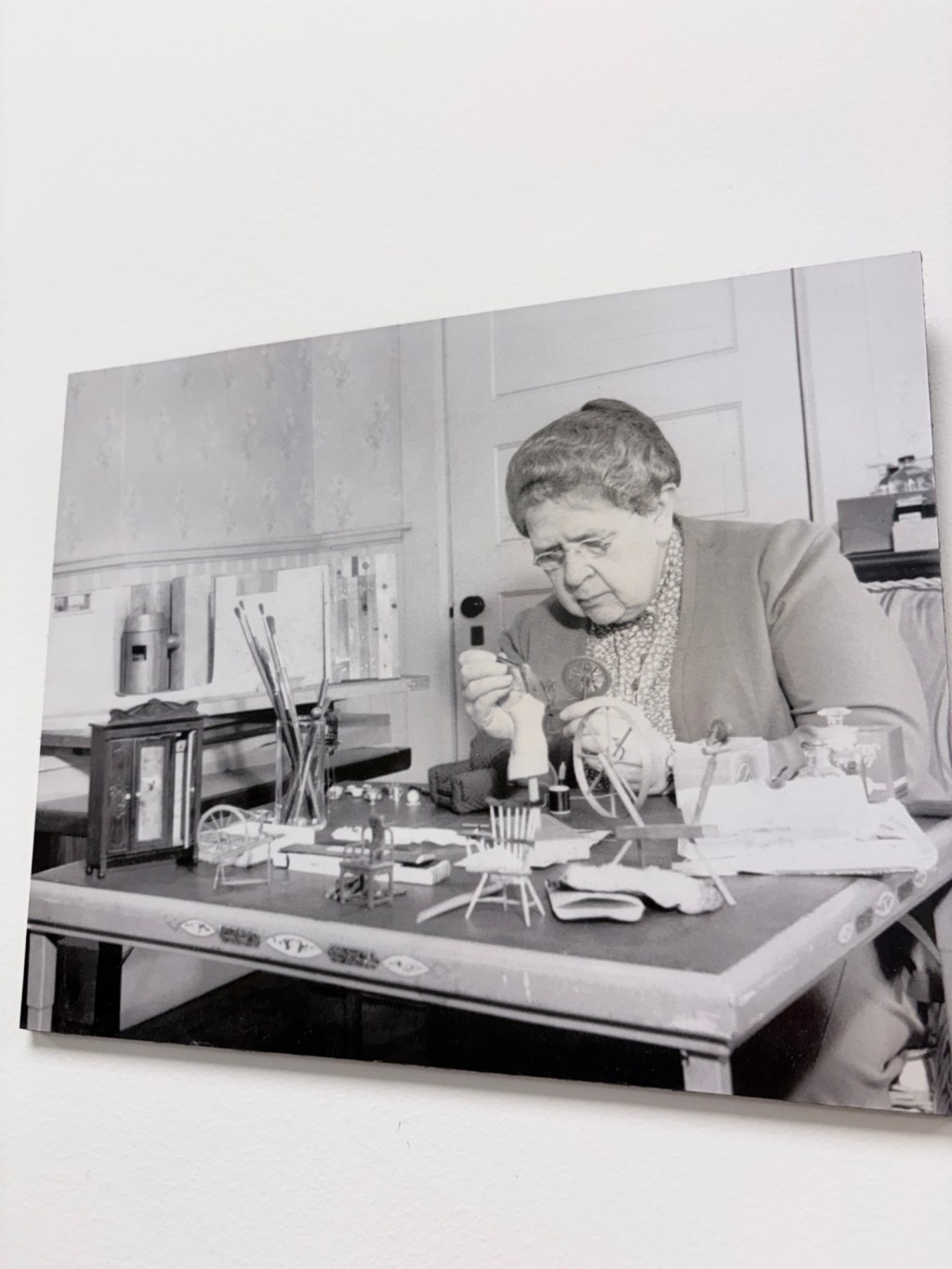
Surprising no one, I’m a lover of True Crime. I’ve been obsessed with True Crime since I discovered Crime Library (RIP) in 1998. So in 2017, when Frances Glessner Lee’s Nutshells came to the Renwick Gallery in DC I took my BFF and the boys to see the dollhouses of murder people were talking about and was enchanted.
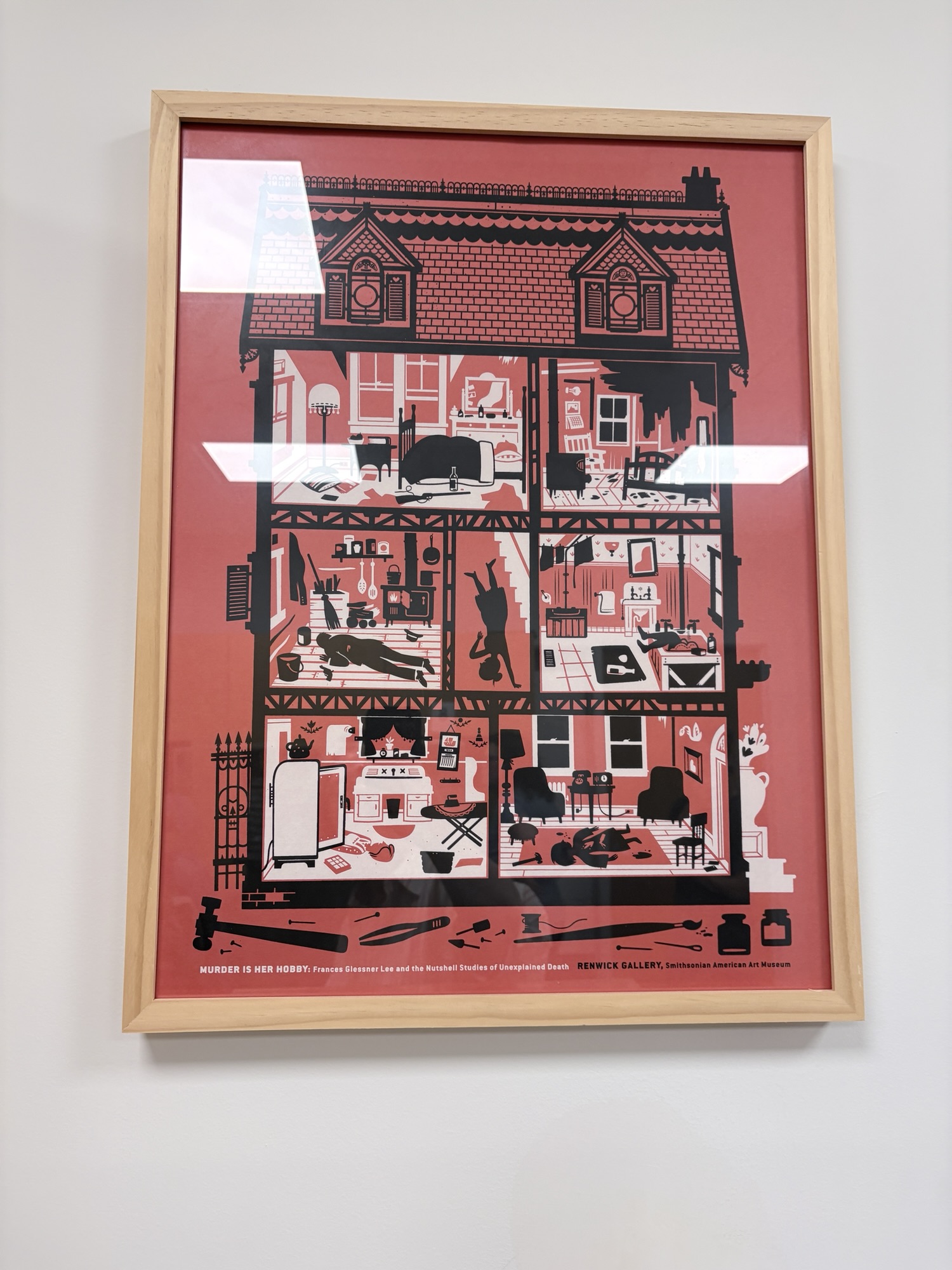
The Nutshells have been on my mind a lot lately so. in a moment where I should’ve been writing, I Googled the Nutshells instead.
I remember they’d been at Harvard as part of their forensics training/legal medicine program, just as Glessner Lee intended when she donated them in 1946. As it turns out, when Harvard axed the program in 1966 they moved to the Maryland Medical Examiner’s Office in Baltimore.
Baltimore! A short hop away from me!
As it happens, I’d recently been made the event coordinator for my chapter of Mystery Writers of America. And what event could be more fun that a field trip to beautiful Baltimore to see these amazing murder dioramas?
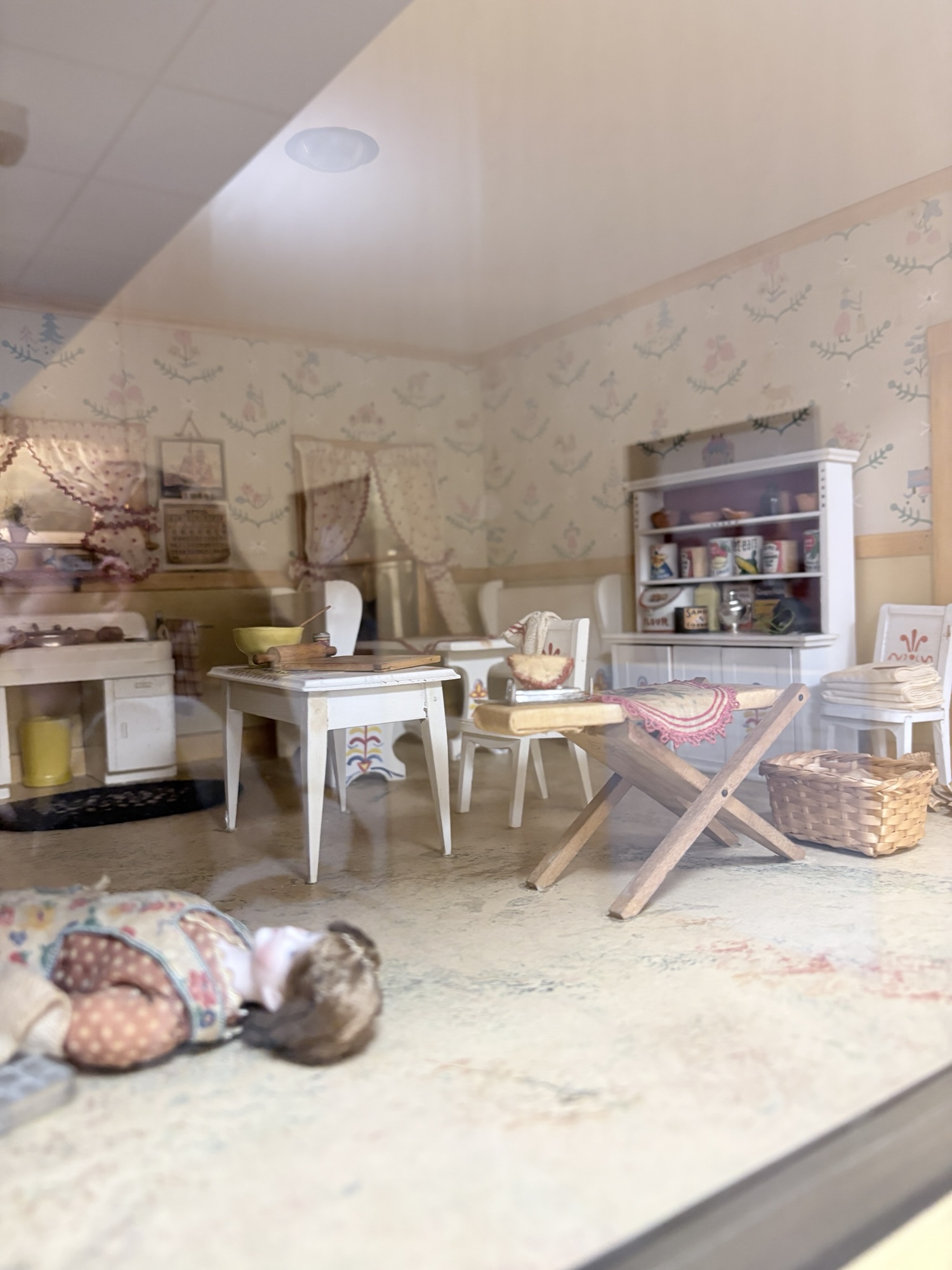
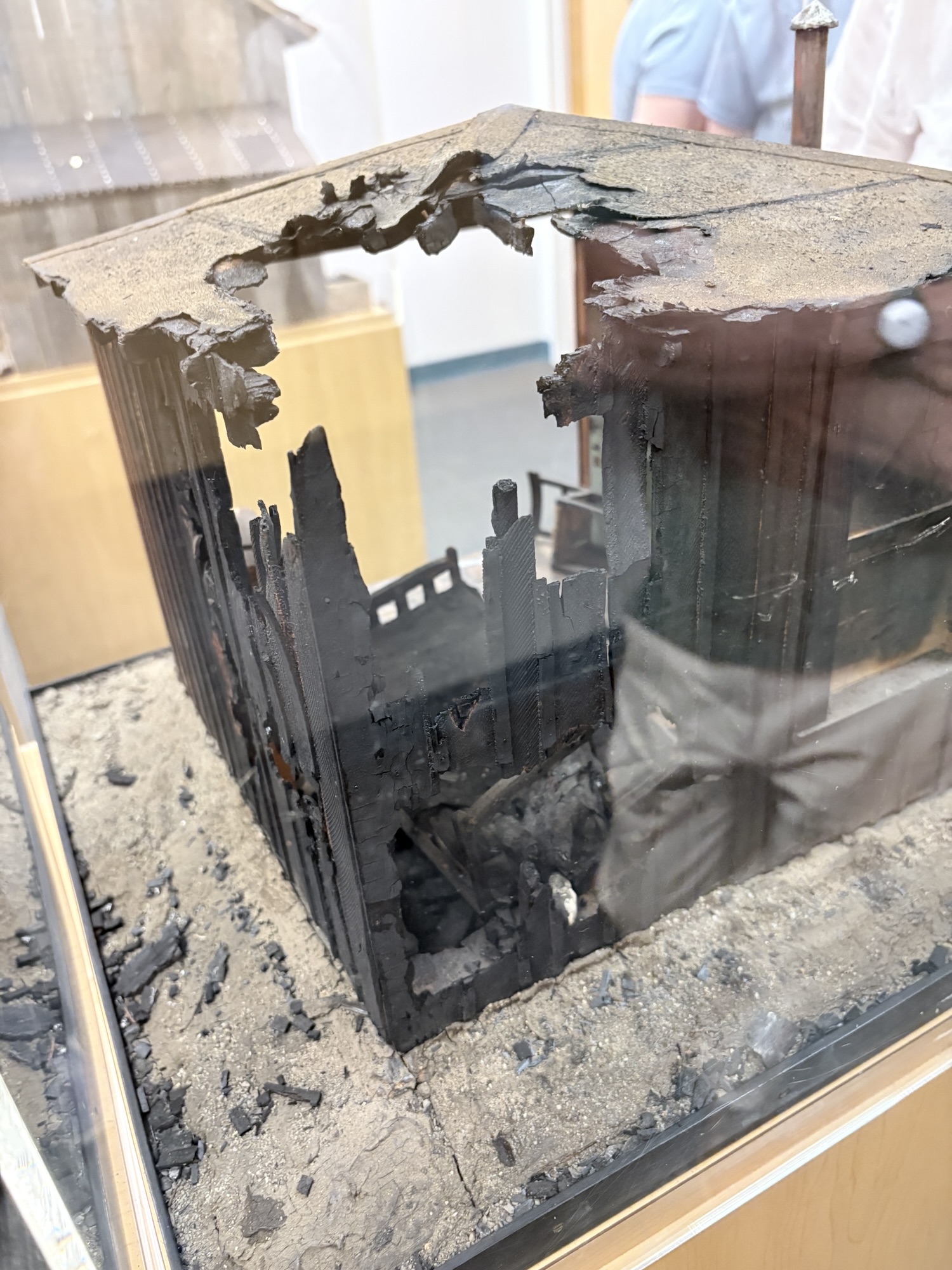
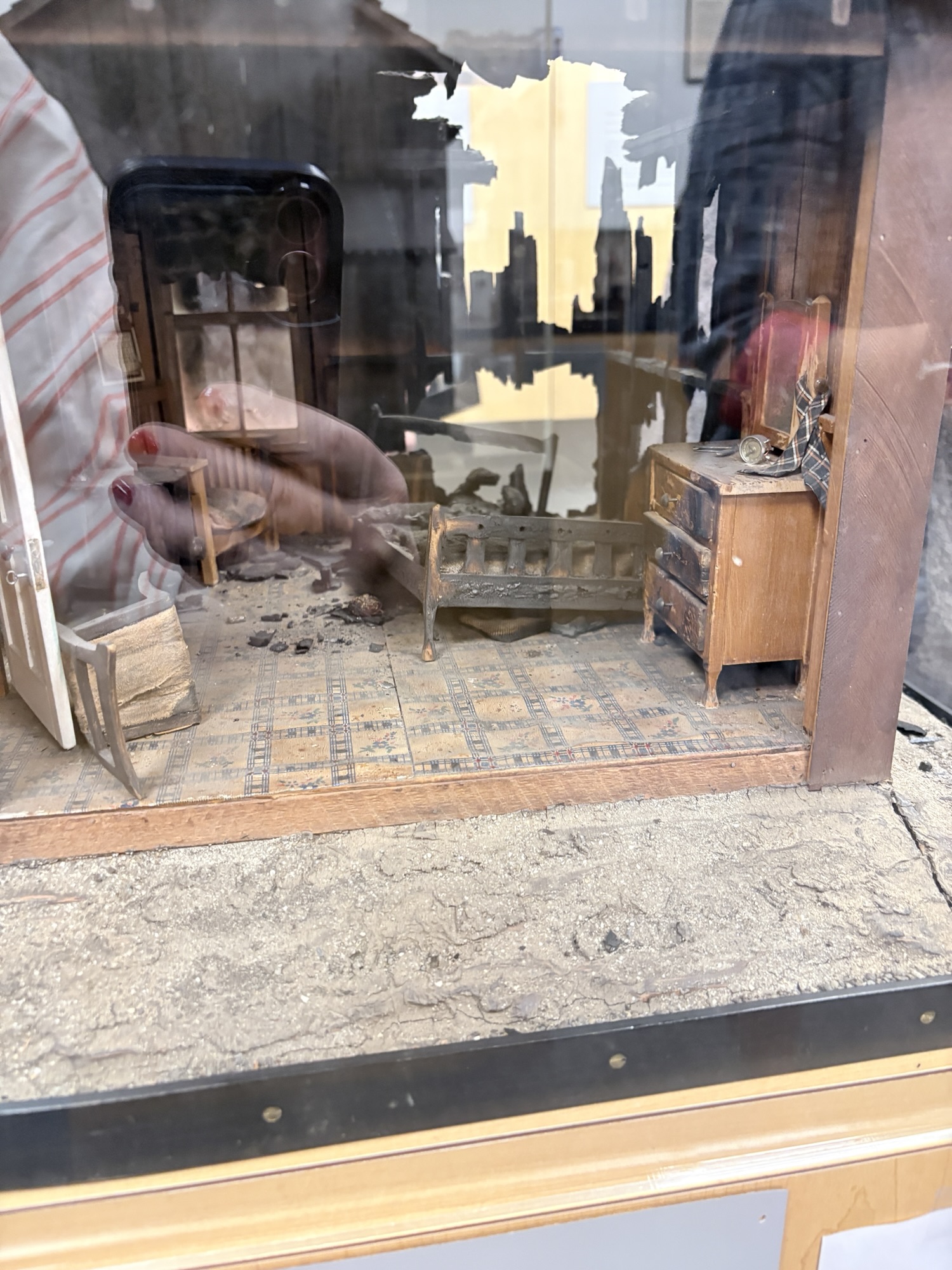
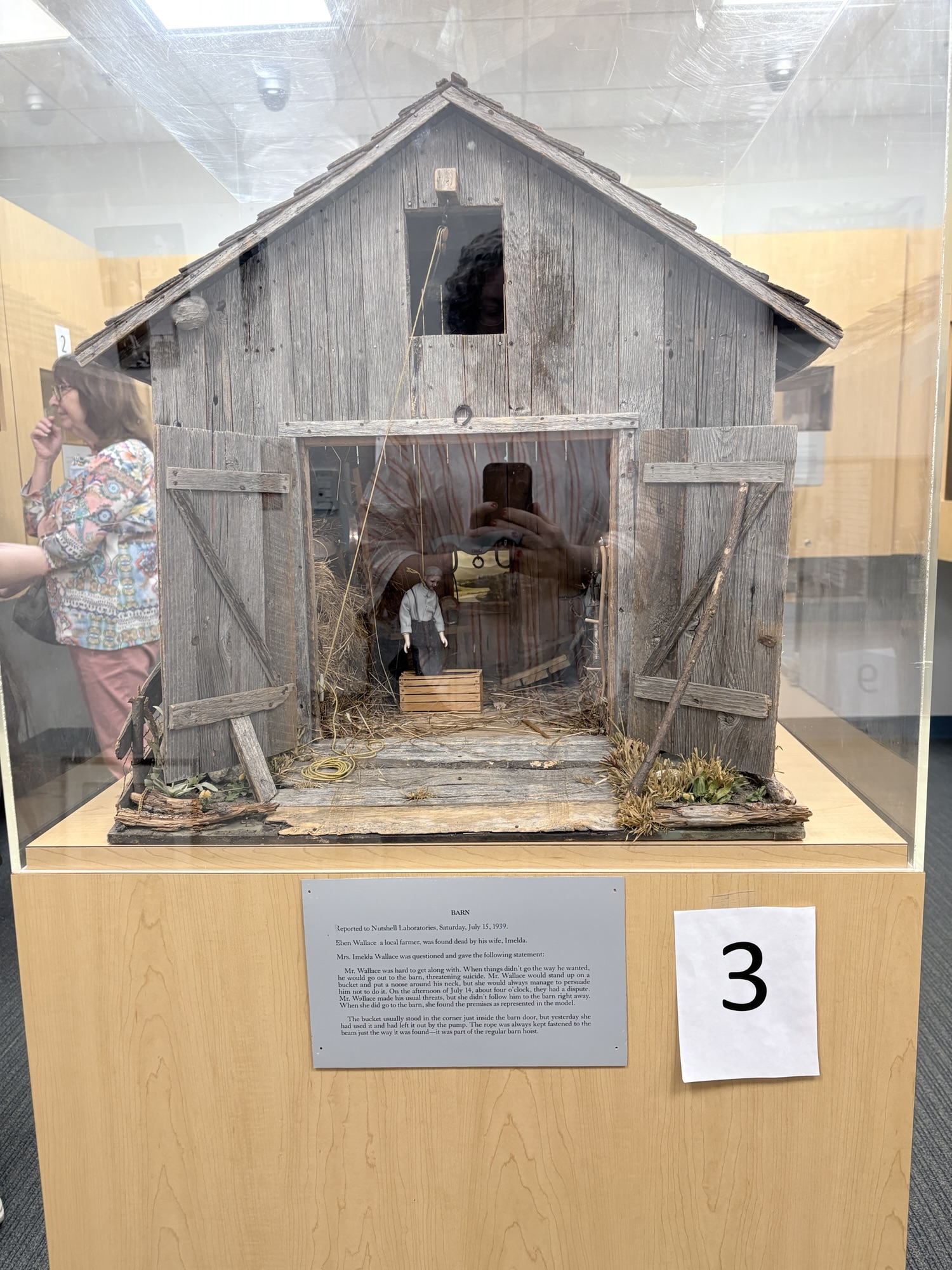
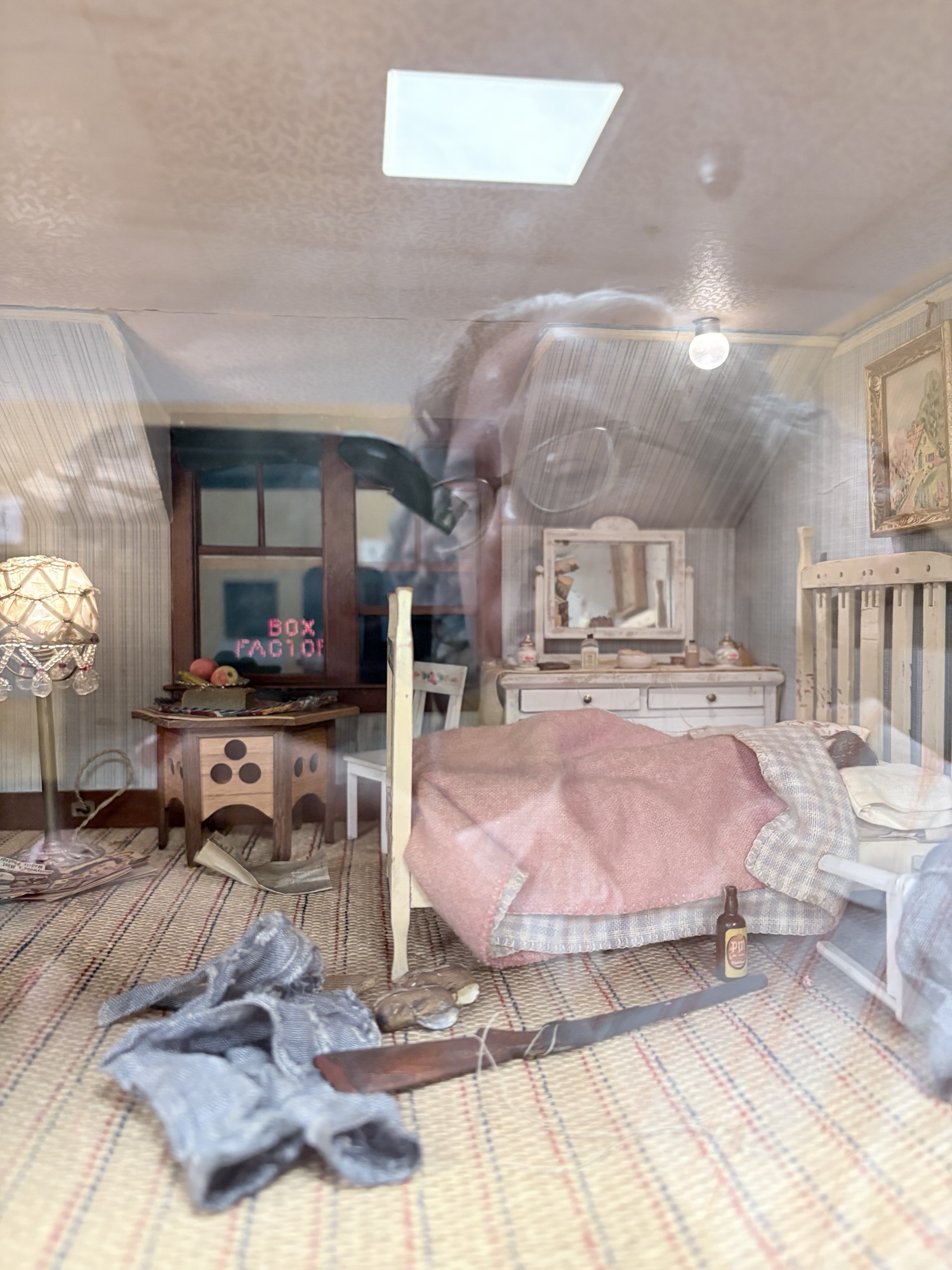
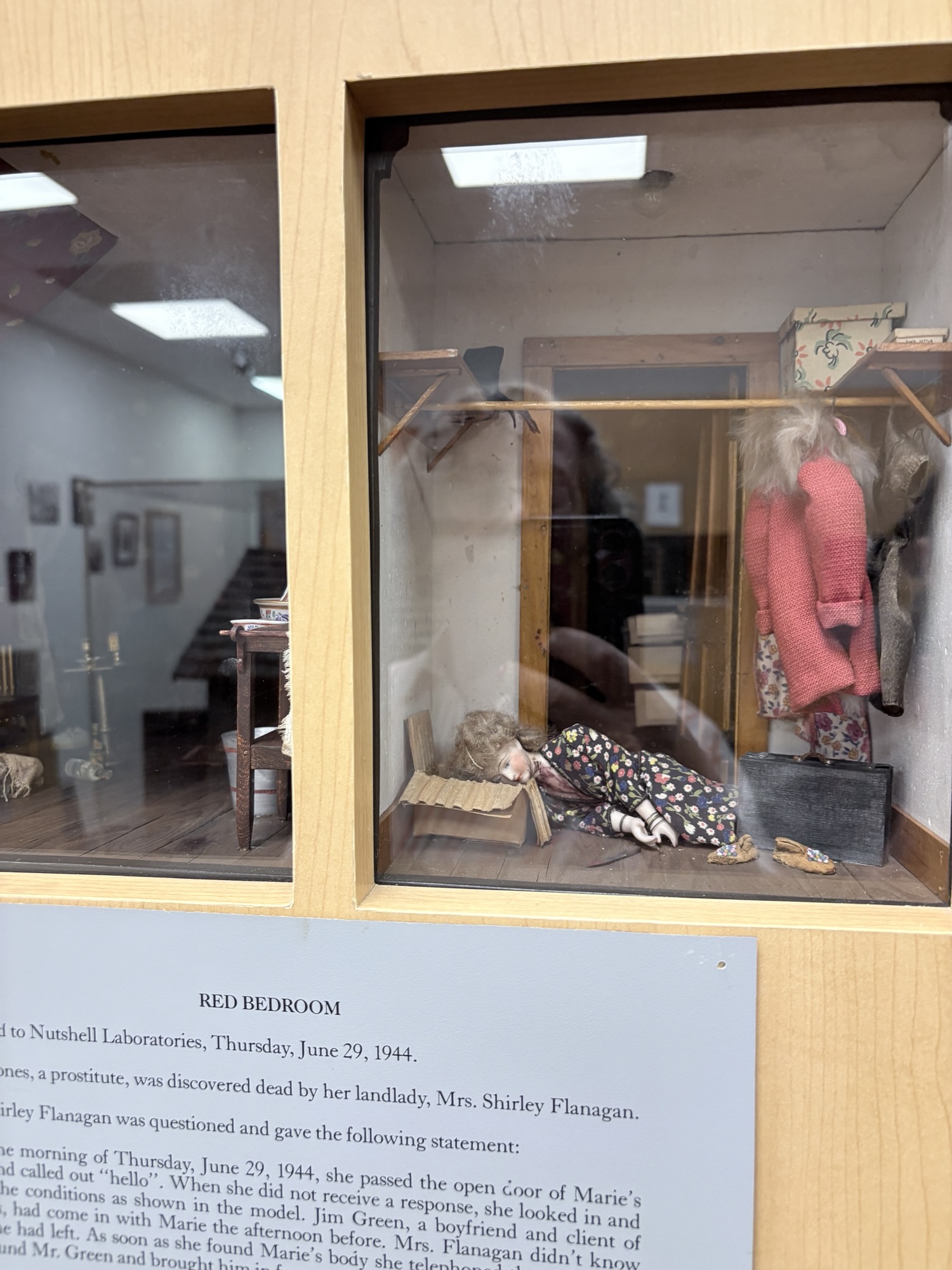
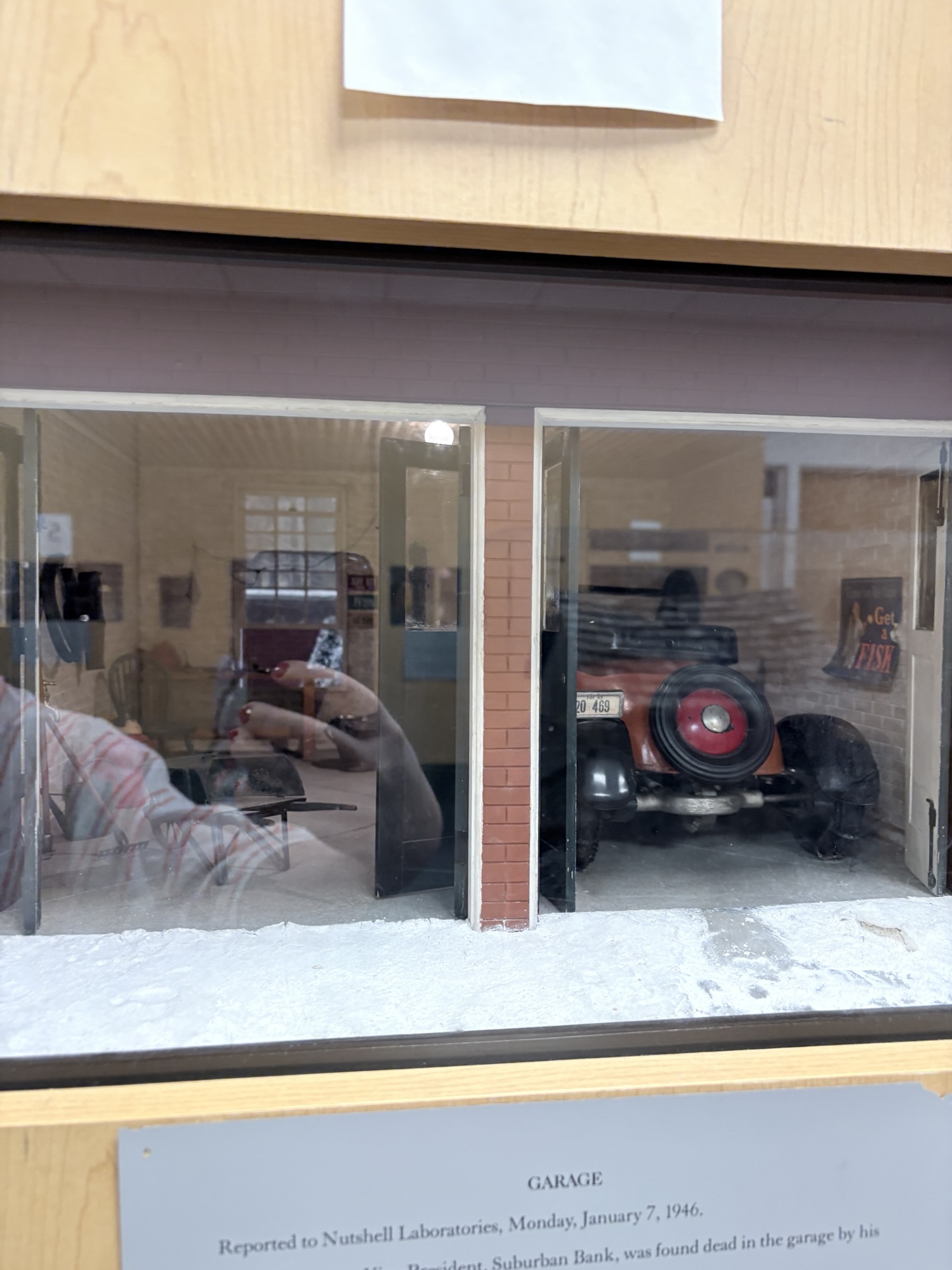
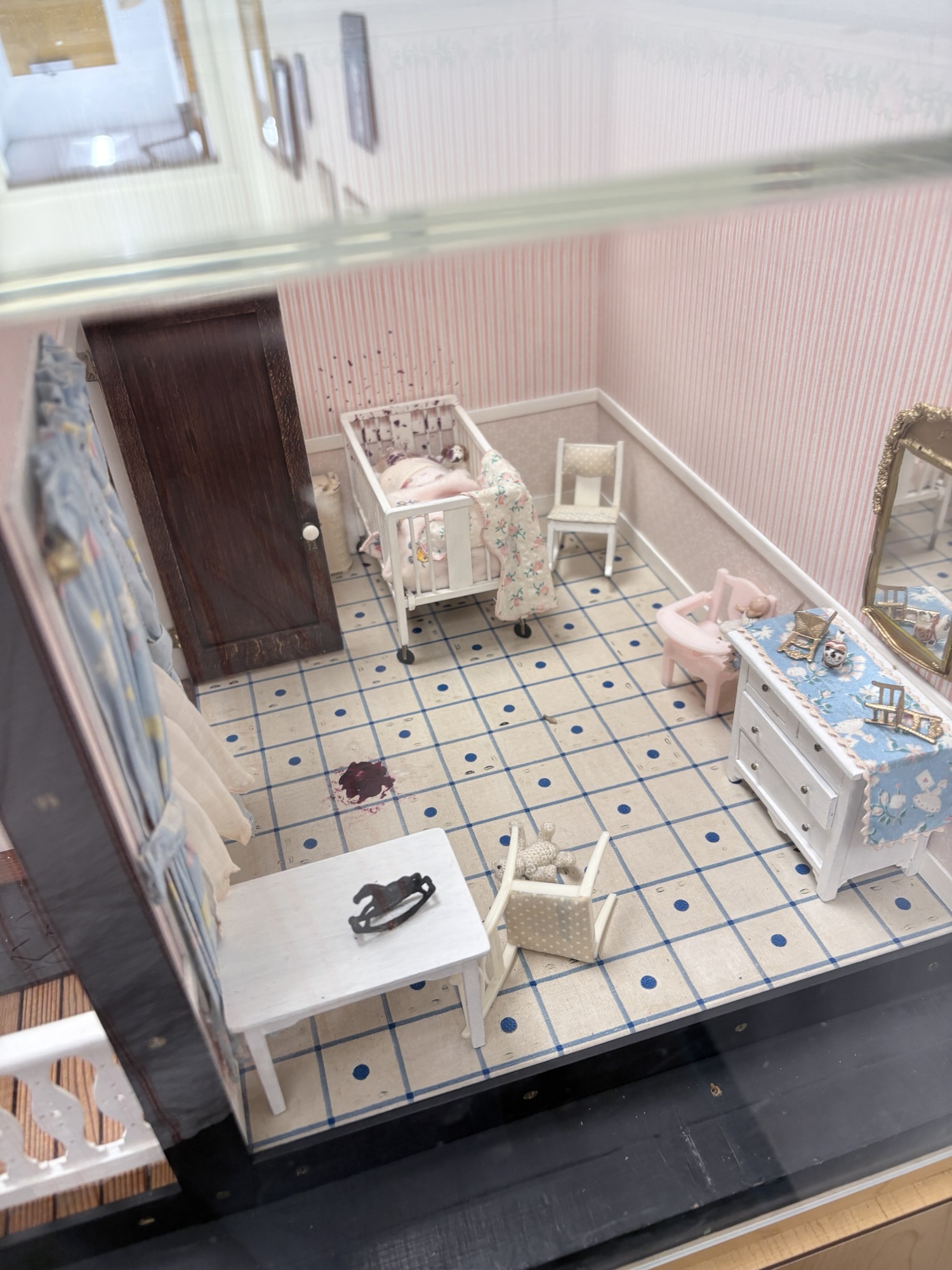
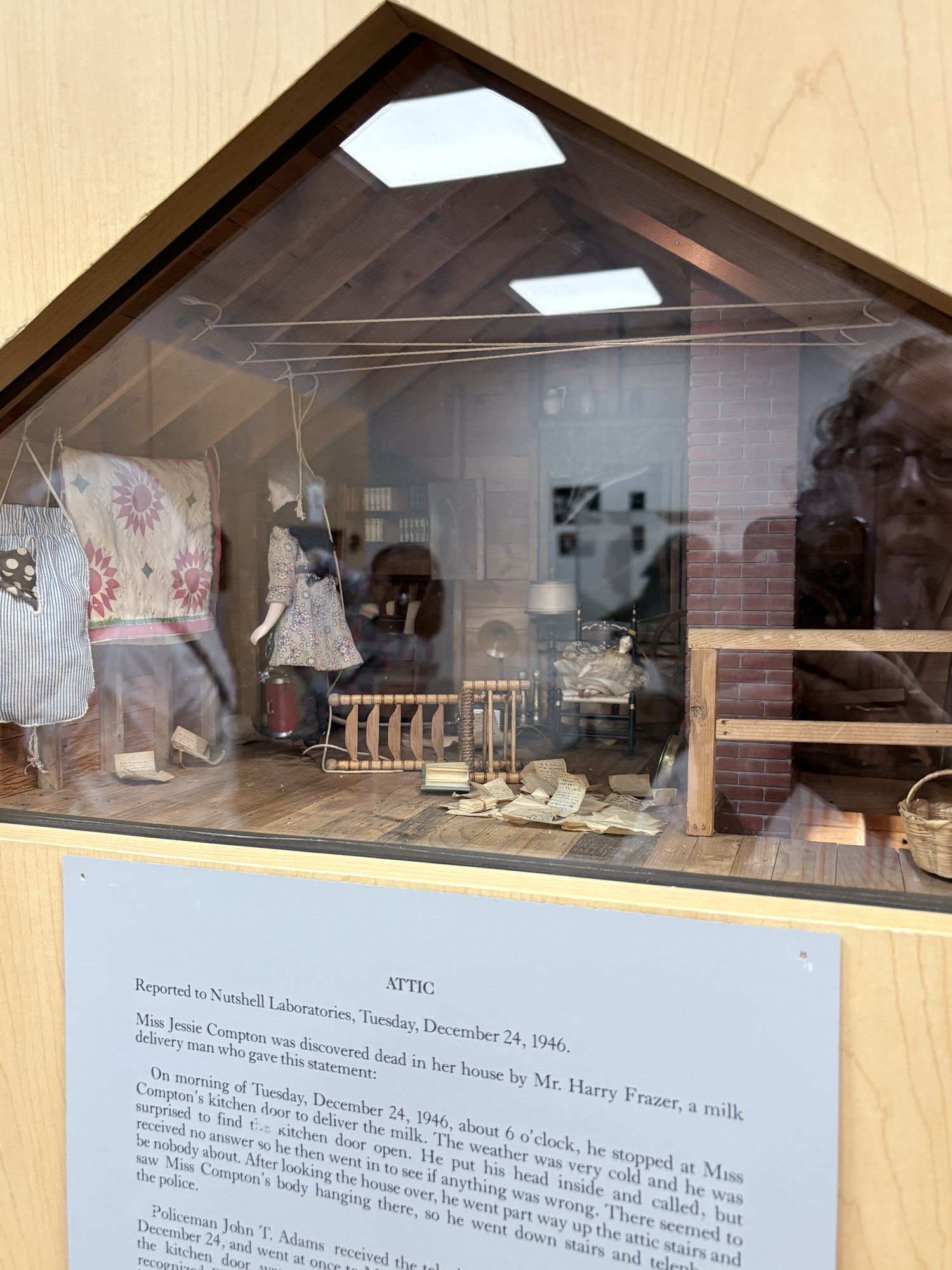
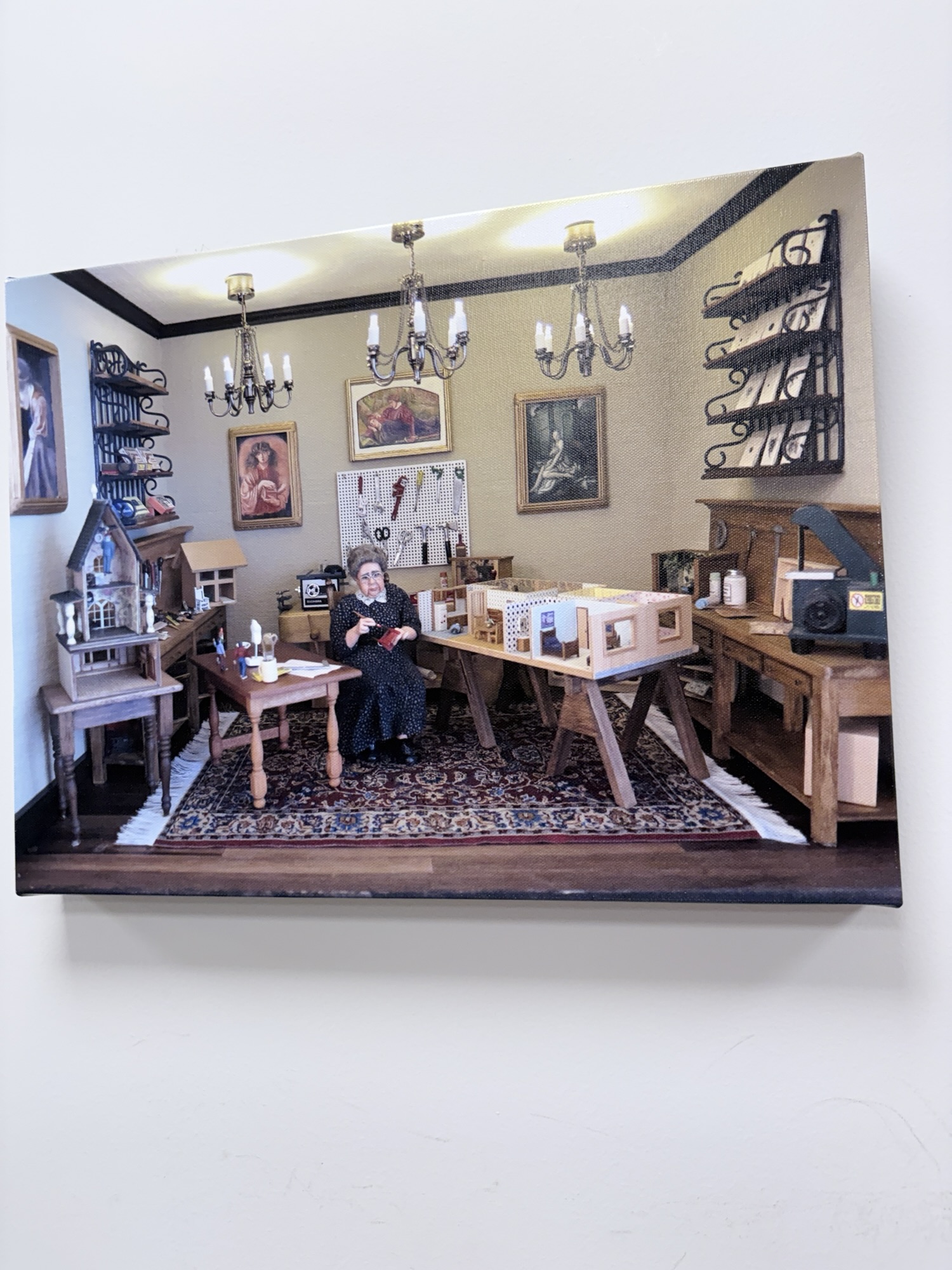
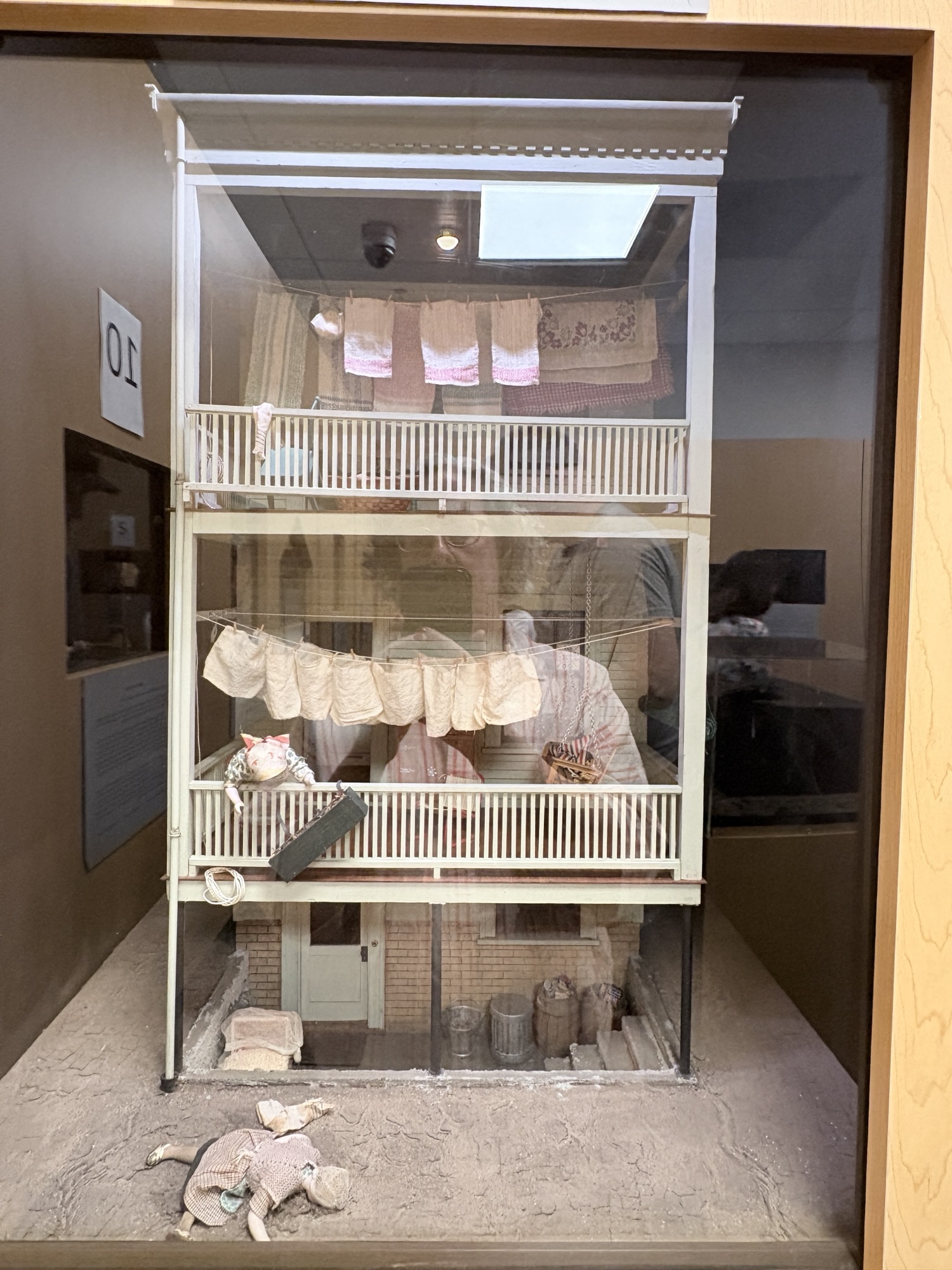
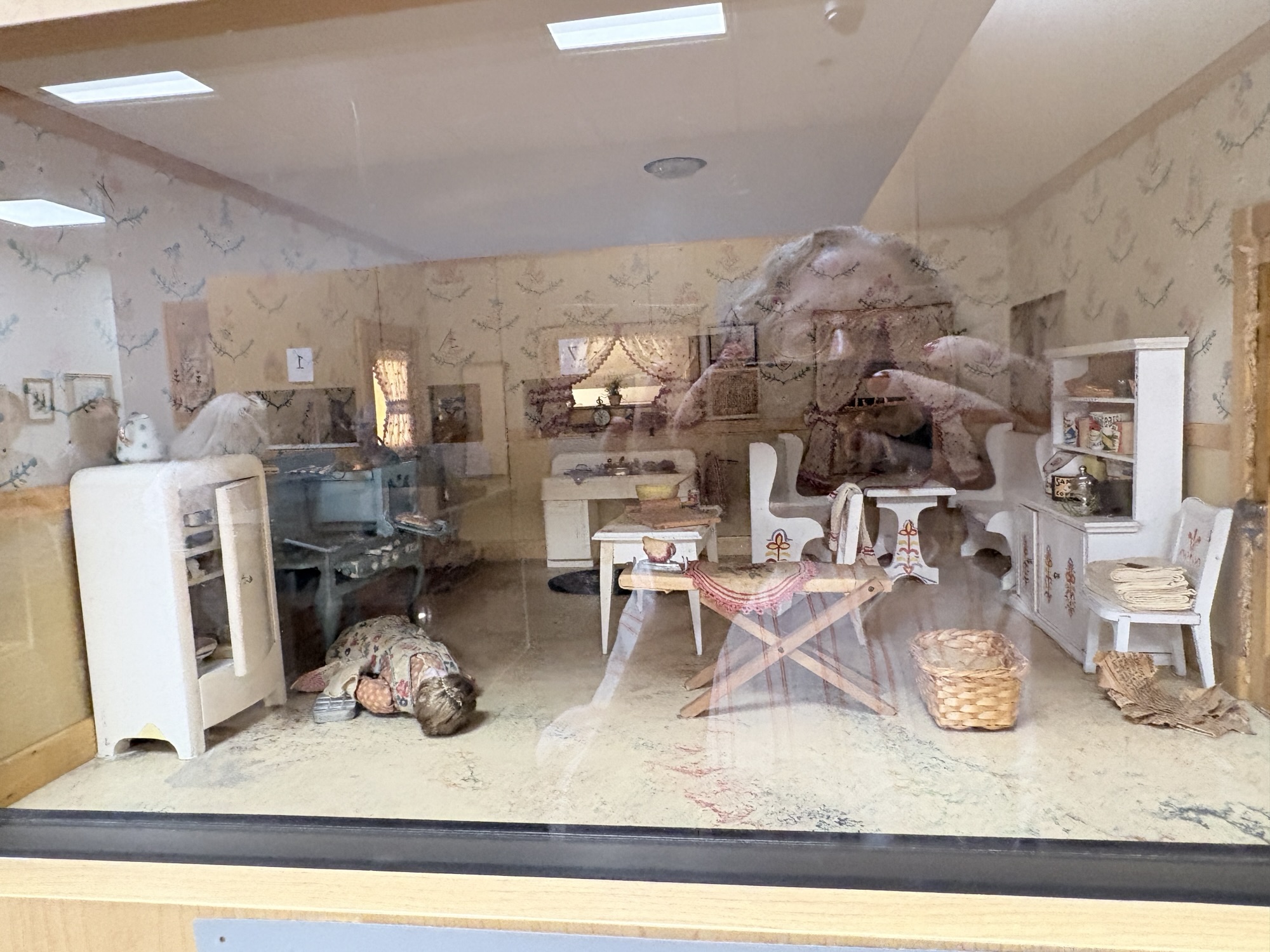
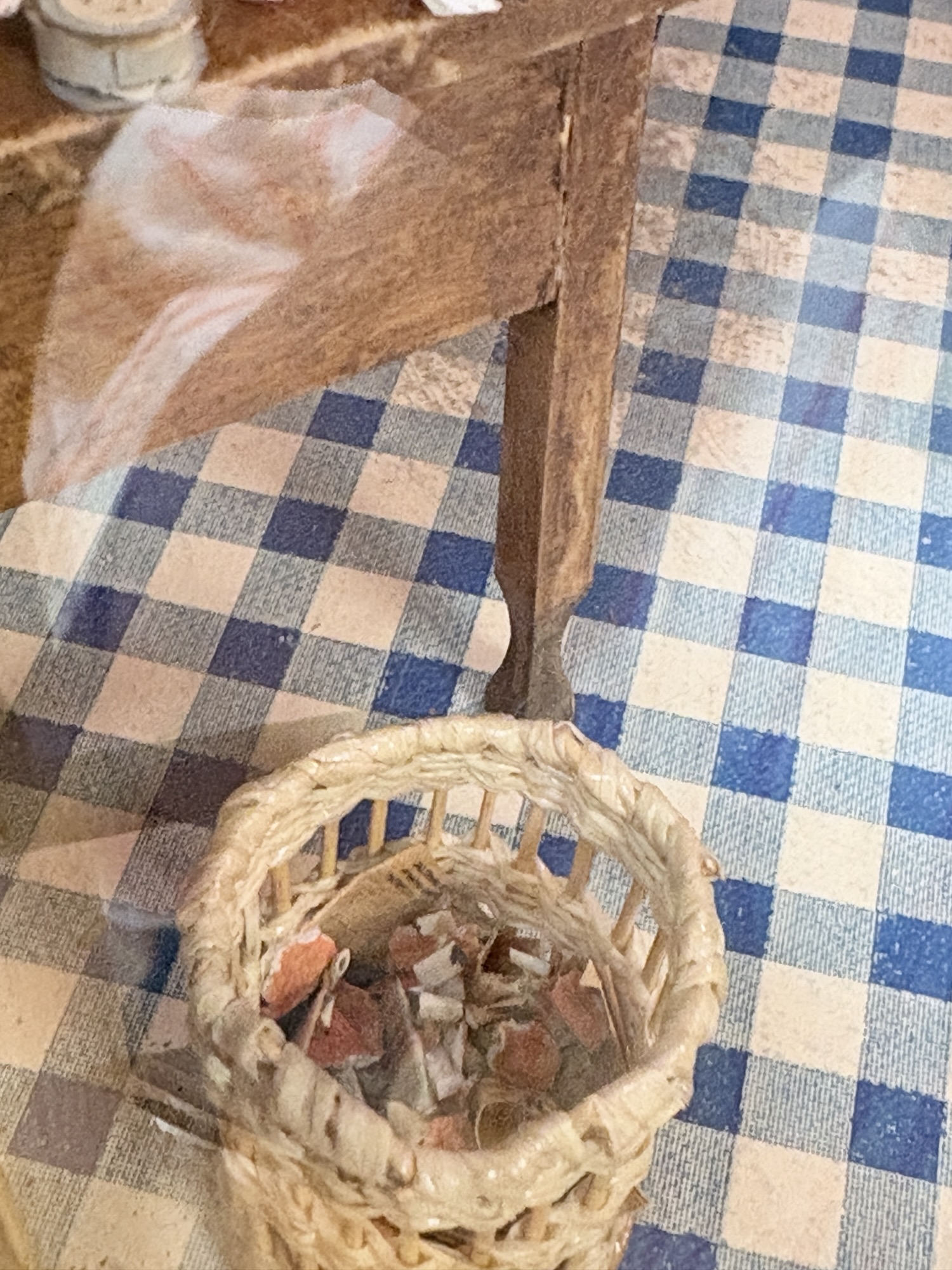
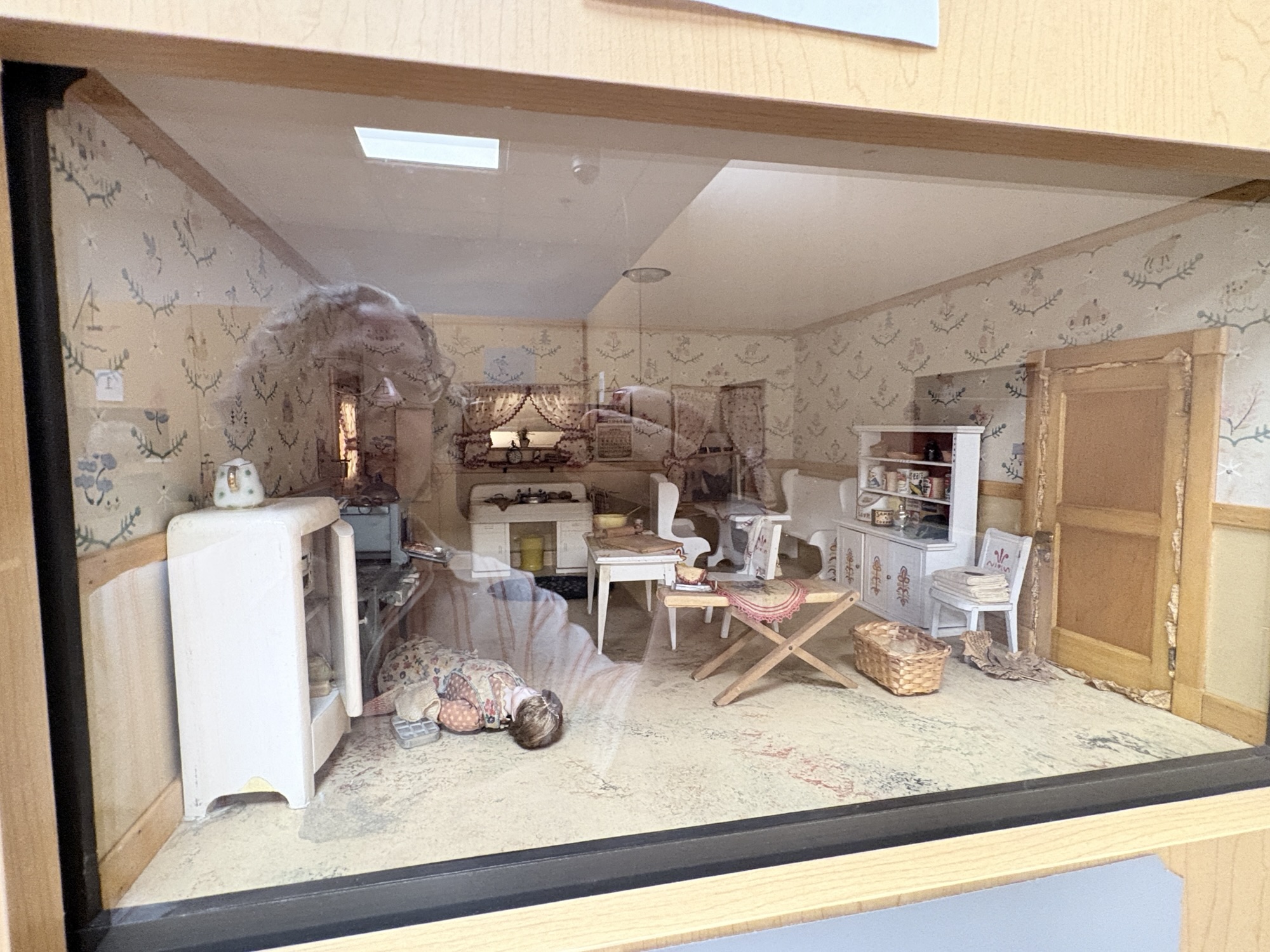
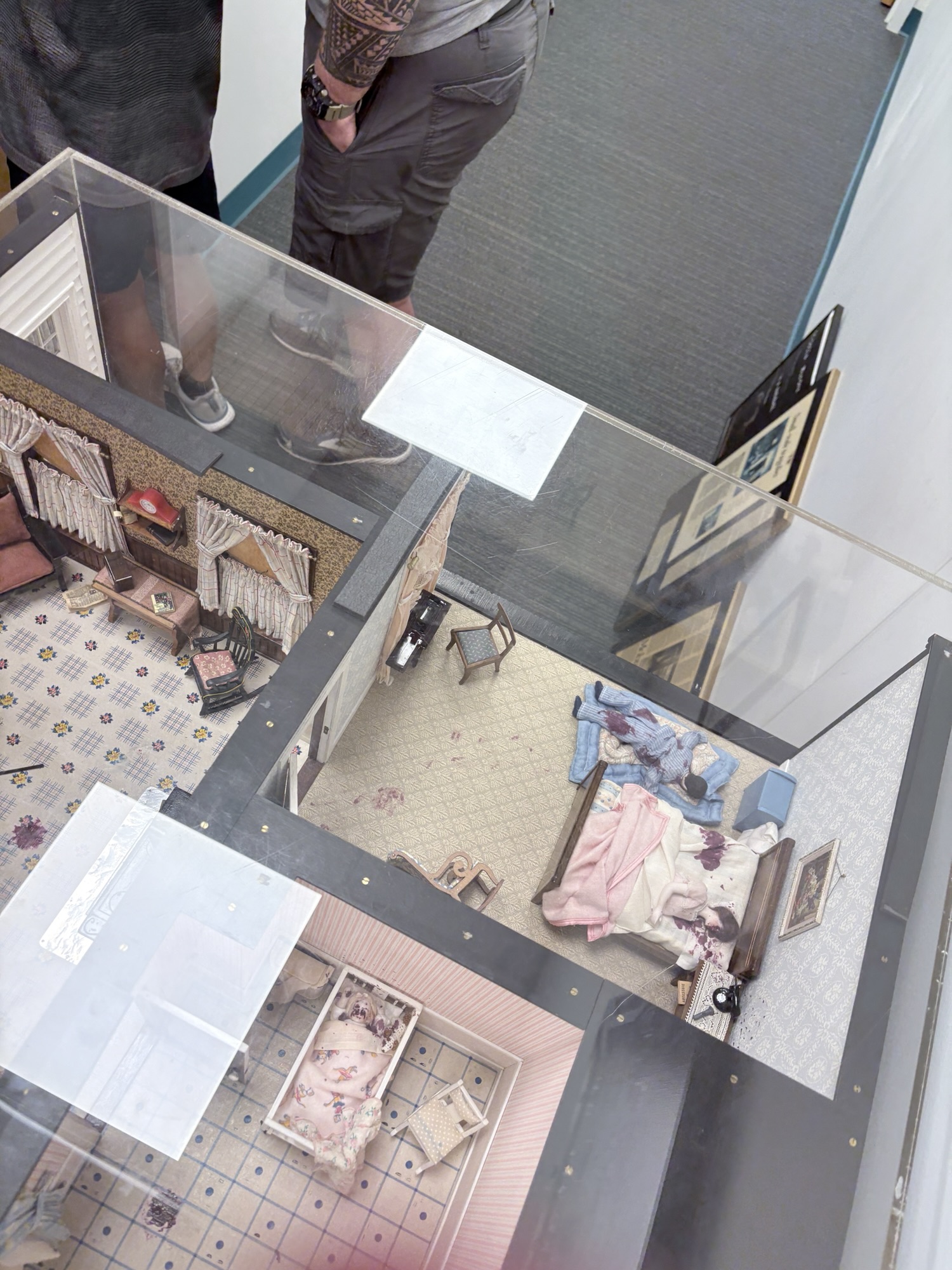
Some of these represent composites of many different cases or situations a forensic investigator might face in the field. Each dollhouse is insanely detailed. Just look at the wastebasket in the bottom row above. There are items in there that give the investigator necessary clues.
Frances wasn’t someone who wanted to make murder dollhouses, I don’t think, but she did want to investigate crimes. This article from the Smithsonian at the time of the Renwick Gallery display makes it sound like she was a welcome part of the boys club of police investigations and university environs. But that’s not exactly true.
She was a woman born in 1878 into rich family. Her legacy was to marry well, have children, and work with charities. The signs in the display room talk about how her brother and his friend went to Harvard. They would come home talking of the forensics and science classes they enjoyed. She wanted to go and learn along side them, but was denied.
So she started to do “women’s things.” Got married, started making diorama replicas of cute places like the Chicago Symphony Orchestra, and endowing Harvard’s Department of Legal Medicine in 1931.
Then in 1936 she inherited her father’s fortune and turned the feminine arts of dollhouse making into something more gruesome. And became a pioneer in the field of forensic studies and investigation processes.
This quote from an article in Dangerous Minds says it all,
It’s poetic, really, that a wealthy old woman with a needle and a bone saw changed the course of forensic science—not with a badge, but with buttons the size of freckles. Glessner Lee’s grim little boxes were like Trojan horses smuggled into a boys’ club. She stitched violence into upholstery and hid murder between the floorboards. While the men puffed pipes and fumbled chalk outlines, she was quietly training generations of cops to see. Not just glance, not guess, but actually see.
You, too, can see these amazing dollhouses of murder for free. The MMEO website has an easy form to fill out and they are prompt with their replies. If you’re curious about them, but can’t make it to Baltimore, this book, The Nutshell Studies of Unexplained Death, by Corinne May Botz is fantastic. Excellent photos and detailed stories behind each dollhouse setting.
FUN FACT: Jessica Fletcher of Murder, She Wrote fame was based on Frances Glessner Lee.


Leave a Reply