

It’s banned book week, kids, and I’ve picked more banned books you should read immediately. But why are books banned in the first place? Is it because they’re bad?
No.
Books are banned because they either contain truths adults don’t want children to face (now and ever), or they challenge the status quo, and/or they threaten the current power structure.
Books are banned because people are afraid of the ideas they might plant in young and energetic minds.
Yet a majority of banned books are classics. Prized and held as a standard of what literature should be. The Catcher in the Rye, Animal Farm, 1984, Fahrenheit 451, To Kill a Mockingbird. Novels we read in high school to teach us about not only literature, but humanity. Our past. What the future could hold.
They teach us how to think. And a free-thinking person–a person with the ability to take information and comprehend its meaning; to develop ideas–is formidable individual.
“An idea is a very powerful thing, and political ideas or religious ideas or economic ideas have always affected and often controlled the courses of man’s destinies. That we understand and accept.”
― J.C. Wylie, Military Strategy: A General Theory of Power Control
Banning books from libraries and schools is completely against why they exist in the first place. We build them so our societies can learn about each other and the world around them.
In 2013, the NIH published a study about reading fiction and empathy. They found avid readers have greater empathy. And two experiments showed “empathy was influenced over a period of one week for people who read a fictional story, but only when they were emotionally transported into the story.” [Emphasis mine.]
Reading is as close as we’ll get to walking a mile in another man’s shoes, which is a phrase I heard over and over in my Catholic elementary school.
And I’m not saying that as parents you can’t determine what books are appropriate for your child. I’m just saying that you shouldn’t be also determining what’s appropriate for my child.
Here are 5 Banned Books you should check out for yourself. See what all the fuss is about.
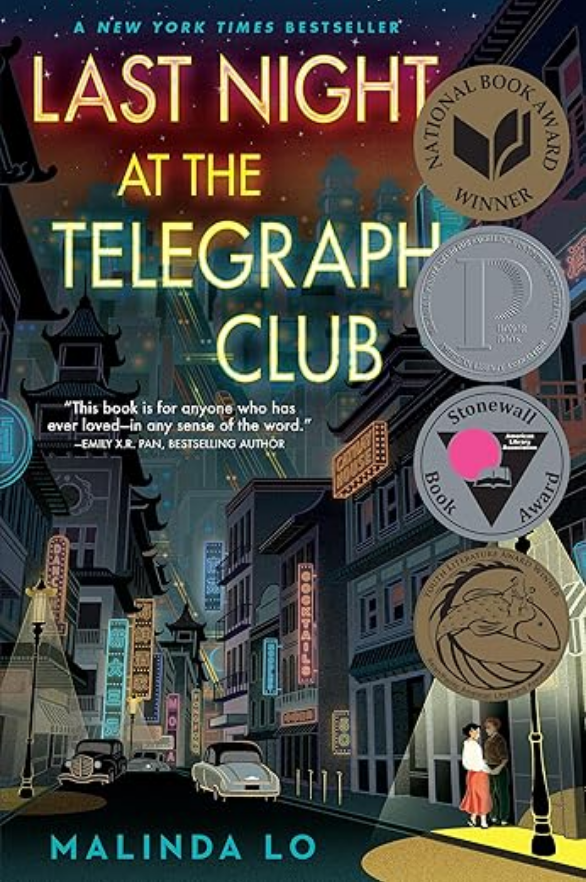
Last Night at the Telegraph Club by Malinda Lo.
I know I’ve talked about this before because the cover image was already in my files, but this is an incredible novel. Set in 1954 in San Francisco, we meet Lily Hu, a teenager growing up in Chinatown during the Red Scare who is also finding out that she might be gay. You get to see the city through her eyes in a time of deportations and political uncertainty, while she’s experiencing her first romance.
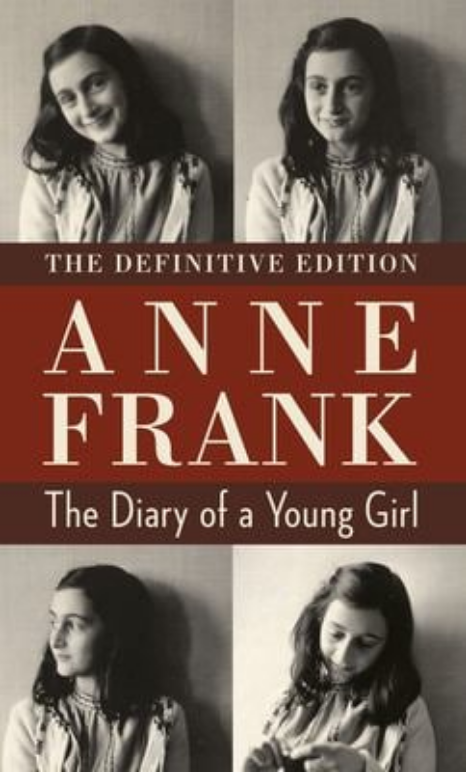
The Diary of a Young Girl by Anne Frank
This banning baffles me. If there’s one book we all need to read this is it. The true diary of a child in Amsterdam hiding in an attic from the Nazis just because she’s a Jew. I’m always struck by how Anne adapts to her environment and finds so much hope inside the darkness. Her ending is bleak, but sometimes we need to look into the monstrous face of humanity so we don’t repeat the mistakes of the past.

The Fire Next Time by James Baldwin
A queer man of color, James Baldwin takes on our legacy of racism and discrimination and calls us to action to end it. Published in 1963, much has changed, and yet too much has stayed the same. This novel–two letters–are uncomfortable for a white person to read, but we need to sit in our discomfort if we are going to learn. As my kid said, “You don’t grow muscles in the gym if you’re not willing to push yourself.” This will novel will grow your empathy muscles in a time when we need it most.

Maus by Art Spiegelman
I was introduced to Maus by a roommate. I thought it was only a graphic novel, but inside was a retelling of the horrors of the Holocaust and the legacy of trauma we’ve all inherited. Yes, I know I’ve put two Holocaust books on this list, but our kids are at a generational cusp where history slips into myth and legend. Where the past, even as horrific as this, can be repeated.

Charlotte’s Web by E.B. White
Ridiculous, right? How can a beloved children’s book about the power of friendship be banned? Well, in 2006, a Kansas school district banned it over a religious objection to talking animals and the depictions of death. The talking animals were blasphemous and unnatural, as they felt only humans should possess the ability to speak. It makes you wonder about all those other banned books.

As my “old buddy” (a friend only in my mind) says, if they’re telling you not to read something, you should probably pick it up and figure out what they don’t want you to know.

 Mindy Carlson
Leave a comment